 Michael Thompson
Key Takeaways
- Mold in an LG front-load washer starts in the damp folds of the door gasket and spreads to the drawer and the drum.
- The advisory says spores can reach clothing and the air and may trigger allergy or respiratory symptoms in sensitive people.
- Clean the gasket folds with equal parts water and white vinegar, clean the drawer and run the TubClean cycle with no laundry.
- Never mix bleach with vinegar or any other cleaner.
- Wipe the gasket after every wash, leave the door ajar, use HE detergent in the right amount and run TubClean monthly.
The Bottom Line
Clean the gasket, the drawer and the drum, then keep the washer dry and run TubClean monthly. Replace the gasket if the mold is in the rubber itself; the price is confirmed after diagnosis, with a written estimate before work begins.
A musty smell from the drum, black specks on the rubber ring around the door and laundry that comes out smelling worse than it went in are the signs most owners recognize first. LG washer mold usually starts in the damp, dark folds of the door gasket and spreads to the detergent drawer and the drum, and it is more than a smell. The advisory on this site says mold spores can transfer to clothing and become airborne in the laundry area, and that they can trigger allergic reactions and respiratory irritation in sensitive people. This guide covers where mold grows, how to clean it safely, how to keep it away and when the gasket has to be replaced.
| Where it grows | What you see | What to do |
|---|---|---|
| Door gasket folds | Black or green specks, slime, a musty smell | Clean with a vinegar solution and dry it |
| Detergent drawer and its recess | Dark residue in the housing | Remove the drawer, clean it and the recess |
| The drum and glass | Film, streaks, odor after a wash | Run the TubClean cycle without laundry |
| Gasket rubber itself | Stains that do not wipe away | Consider replacing the gasket |
| Laundry that smells after washing | Mildew odor on clean clothes | Clean the washer first, then rewash |
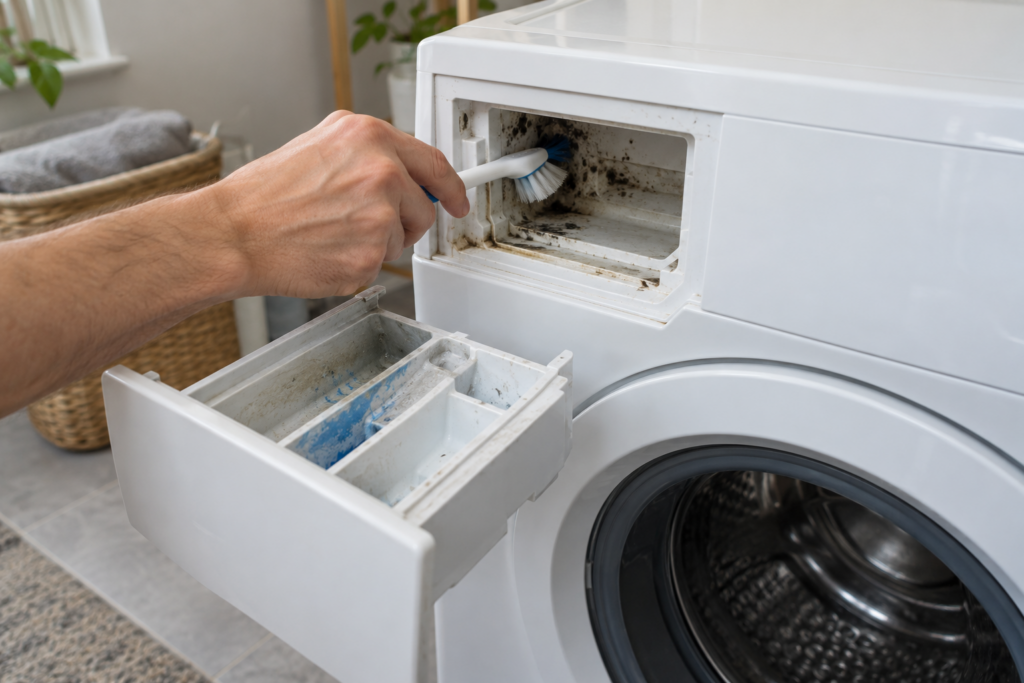
Why Does an LG Washer Get Mold?
Because a front-loader is a sealed, wet space. The advisory says LG front-load washers, like all front-load models, can develop mold and mildew inside the door boot seal and the drum if they are not maintained, and the usual contributors are warmth, moisture that stays after a cycle and detergent residue that mold feeds on. Too much detergent leaves a film in the drum and the drain system, and a door that is closed tight between loads keeps everything damp.
It is a maintenance problem and not a defect of one machine. A front-loader with a dry gasket, the right amount of detergent and a regular cleaning cycle rarely smells, and the same washer neglected for a season can.
Is Washer Mold Dangerous?
It can be for some people, and the advisory is direct about it: spores can reach clothing and the air in the laundry area, and sensitive individuals may react with allergy symptoms, asthma symptoms or respiratory irritation. For most households a small patch is a nuisance. For someone with asthma, allergies or a weak immune system, it is worth cleaning promptly and not putting up with it.
- Do not wear laundry that smells of mildew. Wash the washer first, then rewash the clothes.
- Take care when cleaning. Use gloves, ventilate the room and avoid breathing in the scrubbing dust and spray.
- Do not mix cleaners. Never combine bleach with vinegar or any other cleaner.
- Ask for help if the mold is extensive. A gasket that is heavily colonized is a replacement job.
How Do You Clean Mold Out of an LG Washer?
Start with the gasket, since it is the usual source. Pull the rubber ring back and clean every fold with equal parts water and white vinegar, as the advisory describes, then wipe it dry. For severe buildup the advisory mentions a diluted bleach solution; if you use one, use it alone and rinse well, because bleach and vinegar must never be combined.
- Clean the gasket folds. A soft brush or cloth on every fold, including the hidden bottom.
- Remove and clean the detergent drawer. Mold hides in the housing behind it.
- Run the TubClean cycle with no laundry. The maintenance guide describes it as a high-temperature wash for the drum.
- Wipe the glass and the rim. Then leave the door open to dry.
How Do You Keep It From Coming Back?
With the habits the advisory lists, which are small and cheap. Wipe the inside of the door gasket and the drum after every wash, leave the door slightly open between loads, use only HE detergent in the recommended amount and do not leave wet clothes in the drum for long. Run TubClean monthly; the washer shows a "tCL" reminder when it is due, and the maintenance guide says not to ignore it.
- After every wash. Wipe the gasket and leave the door ajar.
- Monthly. Run TubClean with an empty drum.
- Every load. The right amount of HE detergent, not more.
- Never. Leave a wet load sitting overnight.
Our LG washer maintenance guide sets out the whole routine, and the mold and mildew advisory is the source for the points above.
When the Smell Is Not Mold
A washer can smell for other reasons, and cleaning the gasket will not help if the cause is elsewhere. Water that does not drain completely sits in the pump and the hose and goes stale, and the OE page describes a washer that does not drain. The maintenance guide says the drain pump filter, which traps coins, lint and debris, should be cleaned monthly, and a filter that has been neglected holds a pool of dirty water that smells like mold.
- Smell with standing water in the drum. A drain problem, not just mold.
- Smell with slow draining. Check the drain pump filter first.
- Smell only from the drawer. Clean the drawer and its recess.
- Smell from the gasket only. Treat it as mold in the rubber.
If the washer also stops short of the spin or leaves clothes soaking, our guide to an LG washer not spinning covers that side. It is worth knowing which problem you have before you start scrubbing.
A Short Routine After the Last Load
Most of the work of preventing mold is done in the minute after a wash finishes, when the drum is still damp and the gasket is holding water in its folds. Pull the door open, wipe the inside of the gasket with a dry cloth, including the lower fold where water pools, and wipe the glass. Leave the door ajar, and leave the drawer slightly out if the machine allows it. That small habit does more than any cleaner.
Once a month add the cycle and the drain filter, and once a quarter take a flashlight and look into the gasket folds and behind the drawer. Mold that is caught as a few specks wipes away in a minute, and mold that is caught as a black ring takes an afternoon and sometimes a new gasket.
When to Replace the Gasket
When the mold has gone into the rubber and will not wipe off, or when the gasket is torn, hardened or permanently stained. The advisory says that if mold has penetrated deep into the rubber, replacement may be necessary. A damaged gasket also leaks and can let the door fail to seal, which our LG washer safety risks guide treats as a separate hazard.
A diagnostic visit for an LG appliance starts from $89, with the final price confirmed after diagnosis and a written estimate before any work begins. Schedule a visit or read about LG washer repair.