 Michael Thompson
Key Takeaways
- The LG oven tCO error means the thermal over-temperature cutout has opened the heating circuit; the code is rated high severity on this site.
- Do not use or reset the oven until the cause of the over-temperature event is found, and never bypass the cutout.
- The three causes are a temperature sensor reporting low, a welded relay keeping an element on, or a tripped cutout.
- A power cycle alone does not clear tCO; the cutout stays open until it is reset or replaced and the cause is fixed.
- An oven that stays abnormally hot after switching off should be turned off at the breaker, and the door left closed.
The Bottom Line
tCO is the oven protecting itself, so treat it as out of service. Let it cool with the door closed, do not bypass the cutout, and book a diagnosis before anyone restarts it.
An oven that stops heating and shows tCO has done exactly what it was built to do. The LG oven tCO error means the thermal cutout, a safety device that opens the heating circuit when the oven gets too hot, has tripped. That is a good outcome compared with the alternative, but it is not a fault you should reset and forget, because the question that matters is what drove the oven past its limit in the first place.
| What you notice | What it means | What to do |
|---|---|---|
| Oven dead, tCO on the display | Thermal cutout has opened the heating circuit | Let it cool; do not use it |
| Oven still hot long after switching off | An element may still be energized by a welded relay | Switch off at the breaker and call |
| Food burned well before the timer | Sensor reporting low, oven overshooting | Stop using it; book a diagnosis |
| tCO right after a self-clean cycle | Heavy soil or a long cycle drove the temperature up | Cool, clean by hand, have it checked |
| tCO returns after a power cycle | Cutout still tripped, cause not fixed | Book a diagnosis |
What Does tCO Mean on an LG Oven?
It means the oven's thermal over-temperature cutout, also called a thermal cut-off or thermal fuse, has tripped and cut power to the heating elements. The code page on this site rates it high severity and says the oven will refuse to energize any element until the cutout is reset or replaced. The cutout is a last line of defense, a device that opens when temperatures go beyond a safe limit, regardless of what the control board is doing.
That last point is what makes the code worth taking seriously. The cutout only trips when the normal temperature control has failed to keep the oven in bounds, so something upstream has already gone wrong.
Is It Safe to Use an LG Oven That Shows tCO?
No. The code page says not to use or reset the oven until the cause of the over-temperature event has been identified, because operating it with an unresolved relay or sensor fault creates a serious fire risk. It also says not to bypass the thermal cutout to restore operation, however tempting that looks when dinner is waiting.
Treat the oven as out of service. Cook on the cooktop, in a toaster oven, or elsewhere until a technician has found the cause. If the oven continues to feel abnormally hot after being turned off, or a smell of burning plastic or insulation is present, switch it off at the breaker and keep the door closed.
What Drives an Oven Past Its Limit?
The code page lists three causes, and two of them need a technician. They share a pattern: the control board believes the oven is cooler than it is, or cannot switch the element off, so the heat keeps climbing until the cutout trips.
- A temperature sensor reporting low: the board keeps the element on past the safe limit because it thinks the oven is cooler than it is.
- A welded relay: a relay contact stuck closed keeps a bake or broil element energized with no control, and temperatures climb quickly.
- A tripped or failed cutout: the device itself responded to a genuine over-temperature event and must be replaced after the cause is corrected.
A heavy self-clean cycle on a very dirty oven, or a very long unattended bake, are lower-risk triggers, but the page still says to investigate before restarting. Our pages for the F4 over-temperature safety shutdown and the F5 relay board failure describe the neighboring faults.
Can You Reset tCO Yourself?
No, not by cycling power. The page is clear that tCO cannot be cleared by a power cycle alone, because the cutout stays open until it is reset, if it is resettable, or replaced, and the root cause has to be corrected first. Resetting a cutout without finding the cause just waits for the next trip, and the next trip may happen with food or a person in front of the oven.
- Let the oven cool completely with the door closed, for at least 30 to 45 minutes, as the page advises.
- Do not open the door to speed cooling; sudden temperature change stresses the cavity.
- Think about what it was doing, such as a long self-clean or an unattended bake, and tell the technician.
- Leave the cutout, the relay, and the wiring alone; they sit beside live circuits.
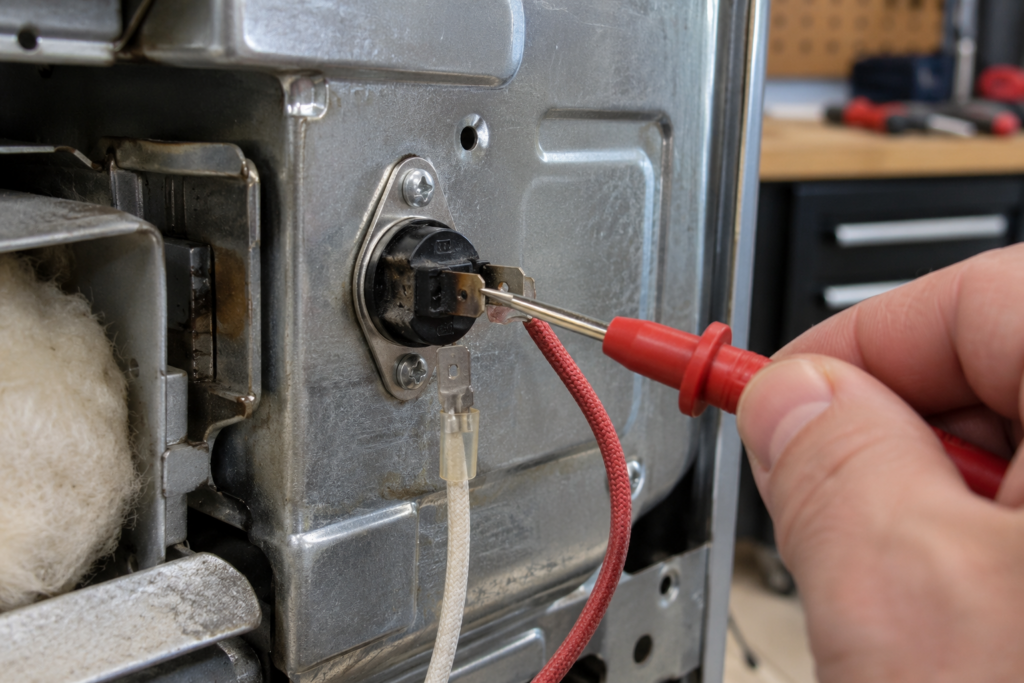
Testing the cutout for continuity with a multimeter is a technician's job. Do not bypass it, even temporarily.
What a Technician Tests
A thermal cutout trip is investigated in a set order, and knowing it helps you judge a quote. The technician checks what could have made the oven overheat, and only then deals with the device that responded.
- The temperature sensor: its resistance is measured against the expected value at room temperature.
- The relays: a relay that has welded closed is identified before any new part is fitted.
- The cutout itself: continuity is tested, and the part is replaced if it has opened for good.
- The wiring and connectors: heat damage or discoloration at the terminals is looked for.
- The oven's own history: long cycles, heavy soil, or a blocked vent that may have contributed.
Expect a written explanation of which of these caused the trip. A cutout that is simply replaced without a cause is likely to trip again, and an estimate that does not name the cause is worth questioning.
Keeping the Kitchen Safe While You Wait
You can live without the oven for a few days, and doing so is safer than any workaround. Keep the door closed, keep the breaker off if the oven stays hot, and keep anything flammable away from the range until the oven has cooled and been checked.
- Do not store pans, towels, or paper in the oven or in the drawer beneath it.
- Make sure the kitchen smoke alarm works, and test it if you have not done so recently.
- Do not run a self-clean cycle until the oven has been inspected.
What to Do Next
Stop using the oven, let it cool, and book a diagnosis. A technician will test the sensor, the relay, and the cutout and tell you which one is responsible, and the final price is confirmed after on-site diagnosis with a written estimate before work begins. If your range is gas, read our LG gas range safety guide for what to do if you ever smell gas, which is a separate emergency. Our LG oven not heating evenly guide covers a less serious cousin of this problem.
Our LG oven repair service handles thermal cutouts, relays, and sensors, and you can schedule a visit whenever you are ready.