 Michael Thompson
Key Takeaways
- tE on an LG washer is a water temperature sensor fault; the washer defaults to cold water, so only heated cycles suffer.
- An LG washer tE error is worth fixing in most cases, because the sensor is a modest part and the rest of the machine is usually unaffected.
- The causes in order are a loose or corroded connector, a failed thermistor, and a damaged heating element.
- Cold cycles can be used safely while the repair is pending; avoid warm and hot cycles.
- Stop if tE also appears on cold cycles or you smell burning during the heat phase.
The Bottom Line
Fix a tE error on a washer that is otherwise sound; it is usually a small repair. Use cold cycles meanwhile, and compare with replacement only when an old washer has several faults.
When an LG washer starts giving cold water on a warm cycle, or stops partway through the heat phase with tE on the display, the first fear is a dead heater and a big bill. In most cases the fault is smaller: tE is a temperature sensor code, and the sensor is a modest part. Whether an LG washer tE error is worth fixing depends on which of three causes you have and on how old the washer is, so the answer is usually yes, with a few clear exceptions.
| What you notice | What it points to | Worth fixing? |
|---|---|---|
| Warm or hot cycles run cold, cold cycles fine | Water temperature sensor or its connector | Yes; a contained repair |
| Cycle halts during the heat phase with tE | Out-of-range thermistor reading | Yes on most washers |
| tE appears on cold cycles too | Wiring or control board beyond the sensor | Diagnose before deciding |
| Burning smell in the heat phase | Heater element may be damaged | Stop; inspect before deciding |
| Old washer with other faults as well | Several parts at the end of life | Compare with replacement |
What Does tE Mean on an LG Washer?
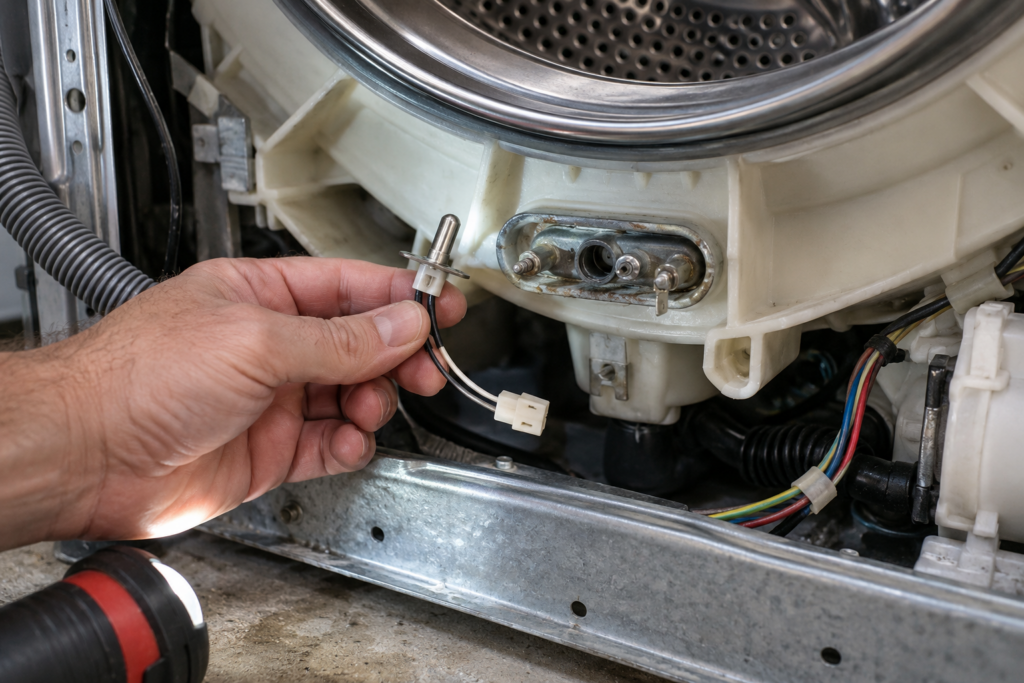
tE means the control board is reading an abnormal resistance from the water temperature sensor, an NTC thermistor, and cannot trust it enough to heat the water. The LG washer tE code page rates it medium severity. The usual signs are warm or hot cycles that produce cold water, a cycle that stops at the start of the heating phase, and a washer that runs too hot, too cold, or erratically because its temperature readings are wrong.
The washer defaults to cold water when it cannot verify the temperature, which is why the machine still works and only the heated cycles disappoint.
Is an LG Washer TE Error Worth Fixing?
Yes in the large majority of cases, because the sensor is one of the less expensive parts on the machine and the rest of the washer is usually unaffected. The code page puts the typical repair at the low end of washer repairs and notes that the machine can be used on cold cycles while the repair is pending. A washer with a good drum, a quiet bearing, and no leaks is worth keeping, and a sensor fix is the cheapest way to restore its heated cycles.
The picture changes if the heating element has been damaged, since the code page lists that as the third cause: a shorted or burned-out heater can take the thermistor circuit with it, making the repair a combined heater and sensor job. Our guide on whether an LG washer is worth repairing covers the whole-machine decision, and the final price is confirmed after on-site diagnosis with a written estimate before work begins.
What Are the Three Causes, in Order?
The code page lists a loose or corroded connector first, a failed thermistor second, and a damaged heating element third. They run from the cheapest to the most expensive, and a technician tests them in that order.
- Loose or corroded connector: vibration loosens the plug, or moisture corrodes it, causing an open circuit that reads as a sensor fault.
- Failed thermistor: the sensing element drifts out of range or fails, and the board reads it as a fault.
- Damaged heating element: a shorted or burned-out element can damage the thermistor circuit as well.
After a repair, the page advises unplugging and replugging the washer to clear the code and then running a warm cycle to confirm the fix.
What You Can Do While You Wait
Use cold cycles and avoid warm or hot ones until the sensor is repaired. The code page says cold cycles can be used safely while the repair is pending, because the heater cannot be properly controlled without a good temperature reading.
- Wash on cold, using a cold-water detergent that works at low temperatures.
- Avoid warm and hot cycles, since the heater cannot be controlled properly.
- Note whether tE also appears on cold cycles, which points at wiring or the board.
- Watch for a burning smell during the heat phase, and stop the washer if you notice one.
- Leave the connector and sensor alone; they sit behind panels near the heater and the wiring.
If tE shows on a cold cycle, or you smell burning, stop using the machine and book a visit; the page lists both as reasons to stop immediately.
When It Is Not Worth Fixing
When the washer is old and the sensor is only the latest of several faults. A washer well beyond ten years old with a noisy bearing, a worn door boot, and a failing heater is spending money on parts that wore out together. In that case compare the combined estimate with a new washer rather than fixing one part at a time.
- Heater and thermistor both damaged on an older machine.
- A bearing or tub fault alongside the temperature fault.
- A repeat of tE soon after the sensor was replaced.
For the whole-machine comparison, see our guide to LG washer repair or replace, and for routine care that keeps sensors and heaters healthy, our LG washer maintenance guide.
One practical tip: note which wash temperatures run cold and which still heat, and tell the technician. A washer that heats on some settings but not others points at the sensor or its connector rather than at the heater, and that detail saves time on the diagnosis.
What a Visit Covers
A technician starts at the plug and works toward the heater. The connector is inspected first, because it is the cheapest cause and the most common, then the thermistor is measured against its expected resistance, and finally the heating element is checked for a short. After the repair, the washer is run on a warm cycle to confirm that the water actually heats and the code stays away.
- Connector: reseated and checked for corrosion or bent pins.
- Thermistor: resistance measured and compared with the specification.
- Heater element: tested for a short that could damage the sensor circuit again.
- Warm test cycle: run at the end to confirm the water heats.
Ask for these steps to be listed on the estimate. If the sensor is replaced but the heater was never tested, the same code can return, and you will have paid for the repair twice.
Getting the Sensor Fixed
Our LG washer repair service tests the connector, the thermistor, and the heater in turn and gives you a written estimate for the part that failed. The LG washer error codes page lists the other codes if tE is not the only one you have seen. When you are ready, schedule a visit and mention which cycles run cold.