 Michael Thompson
Key Takeaways
- The LG washer dE2 error code means the door latch has not confirmed it engaged — a safety check, not a mechanical failure most of the time.
- An obstruction in the door seal or a door that was not pushed firmly closed causes the large majority of dE2 codes.
- Wiping the seal, checking for anything caught, and closing the door firmly resolves most cases without a service call.
- A worn latch mechanism or lock assembly is the cause when dE2 keeps returning after these checks.
- This is unrelated to CE, a motor overcurrent fault that calls for stopping the washer immediately.
The Bottom Line
The LG washer dE2 error code almost always means an obstruction in the door seal or a door not pushed fully closed. Check the seal, close it firmly, and only book a technician if the code keeps returning.
An LG washer that stops before it even starts filling, showing dE2, is not reporting a mechanical failure inside the machine — the LG washer dE2 error code means the door latch has not confirmed it is engaged, and in the large majority of cases the fix takes less time than reading this paragraph.
| Code | What it means | Severity |
|---|---|---|
| dE2 | Door latch not engaged | Low — usually self-fixable |
| dE | Lid or door open detected | Low — check the seal or latch |
| CE | Motor overcurrent | Stop using and call a technician |
What Does the LG Washer dE2 Code Mean?
It means the control sent a signal to lock the door and never received confirmation back that the latch actually engaged. A front-load washer will not start a cycle with an unconfirmed door lock, for good reason — a door that pops open mid-spin with a full drum of water and wet laundry is a genuine hazard, and the dE2 code exists specifically to prevent that scenario rather than to describe one that already happened.
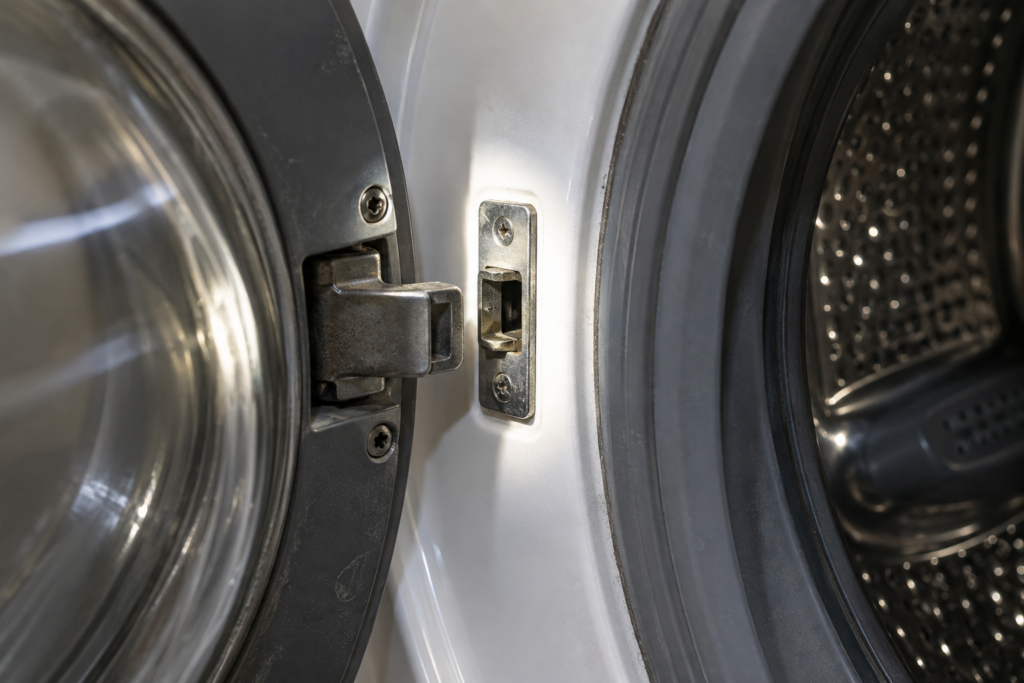
What Usually Causes dE2
- An obstruction in the door seal. A sock, a small garment, or a build-up of detergent residue caught in the door boot can prevent the door from closing fully enough for the latch to confirm engagement.
- The door was not pushed firmly closed. On some models the door needs a deliberate push until it clicks, not just a light close.
- A worn latch mechanism. Over years of use, the strike plate or the latch assembly itself can wear enough that it closes but does not seat firmly enough to trigger the sensor.
- A failing door lock assembly. Less commonly, the electronic lock mechanism itself has failed and needs replacing rather than adjusting.
How Do You Fix dE2 Yourself?
- Open the door fully and run a hand around the entire door seal, checking for anything caught in the gasket fold.
- Close the door firmly until you hear or feel a distinct click, rather than just pushing it shut lightly.
- Restart the cycle and see whether dE2 clears — most cases resolve at this step.
- Check for a warped or loose door if the code repeats, since a door that does not sit flush against the frame will not latch reliably no matter how firmly you push it.
- Inspect the latch strike plate on the machine frame for visible wear if the door itself looks and closes fine.
If dE2 clears on the first retry and does not come back, there is nothing further to do — this was almost certainly an obstruction or a door that was not fully closed, not a sign of a developing fault.
Why the Washer Checks the Door Latch at All
Because a front-load washer fills and spins with the drum sealed shut, and the consequences of a door failing mid-cycle are more serious than on a top-load machine. A full drum spinning at speed with an unsecured door can eject water and, in a worst case, the door itself. LG builds the latch confirmation step in specifically to prevent the cycle from ever starting under a false assumption that the door is secure, which is why the machine would rather stop and show dE2 than guess.
- The check happens before every cycle, not just occasionally, which is why dE2 can appear even on a washer that has run thousands of loads without issue.
- It is a confirmation failure, not a lock failure, in most cases — the door may well be closed, but the sensor has not received the specific signal it needs.
- The same system protects against a door opening mid-cycle, which is the related dE code rather than dE2 specifically.
When Should You Call a Technician for dE2?
Call one if the code returns repeatedly even after confirming the seal is clear and the door is closing firmly. At that point the latch mechanism itself is the likely cause, and while the part is not expensive, replacing it correctly means removing the door and the surrounding trim on most models — not a job to improvise with the machine mid-cycle. This is different from a related but more serious code on the same machine: CE, a motor overcurrent fault, which calls for stopping the washer immediately rather than the simple checks that resolve most dE2 cases.
A washer that also shows signs covered in our LG washer not spinning guide alongside a door latch issue is worth a full diagnostic rather than addressing the two symptoms separately, since they can sometimes share a control-board cause.
How to Prevent a Repeat dE2
A short habit prevents most repeat door latch codes: wipe the door seal after wash days, especially if you use fabric softener, which leaves a residue that builds up in the gasket fold over time and is a common, overlooked cause of dE2 on machines that otherwise close normally. Leaving the door open between loads to air out the drum also reduces the moisture and residue buildup that eventually interferes with the seal. Our LG washer maintenance guide covers this and the rest of the seasonal upkeep that keeps a front-load washer running quietly for years.
Our LG washer repair service covers the door latch, the lock assembly, and the control board diagnosis together. Diagnostic work starts from $89, though most dE2 cases never need a service visit at all. Schedule a visit if the code keeps returning after you have checked the seal and confirmed the door is closing firmly, and mention whether the door feels loose or misaligned when you book — that detail alone often points a technician straight at the latch mechanism rather than a longer diagnostic search.
It is worth remembering that a washer showing dE2 has not lost the ability to wash clothes at all — the machine is simply refusing to start until the safety confirmation is satisfied. This is a very different situation from a washer that starts a cycle and then fails partway through, which usually points at a different system entirely. Treating dE2 as "the washer is broken" leads some owners to book a repair visit that turns out to be unnecessary once the actual cause — a stray sock in the seal, more often than not — is found and cleared. Taking thirty seconds to run a hand around the full circumference of the door boot before calling anyone saves both the wait for an appointment and the cost of a visit that would have ended the same way regardless.
A quick owner checklist for a first dE2, in order: open the door and run a hand around the full gasket fold checking for anything caught; look specifically at the bottom of the boot, where small items and lint tend to collect; close the door with a firm, deliberate push rather than a light touch; and start the cycle again before assuming anything is actually broken. Most owners never need to go past that first step, and the ones who do usually find the culprit at the second one.