 Michael Thompson
Key Takeaways
- This site puts the typical lifespan of an LG refrigerator at 12 to 17 years.
- Fans, sensors, the defrost heater and the ice maker tend to wear before the compressor does.
- Dust on the condenser coils is the number one cause of cooling failures on this site.
- Coils, filter, gaskets, temperatures and the drain hole make up the half-hour routine that slows wear.
- A major repair past about 12 years, or two in two years, is where age tips toward replacing.
The Bottom Line
Treat the lifespan as a timeline: build habits early, repair small faults promptly and weigh each repair against the age after 10 years. A repair price is confirmed after diagnosis, with a written estimate before work begins.
Refrigerators run around the clock for a decade or more, so the question of how long one will last is really a question about wear: which parts tire first, which habits slow it down and when the first signs of age show up. The answer is more useful as a timeline than as a single number. This guide follows an LG refrigerator through its years, and it leans on the fault codes and maintenance advice already on this site rather than on rules of thumb from elsewhere.
| Age | What to expect | What to do |
|---|---|---|
| Years 1 to 5 | Few faults; the odd sensor or filter issue | Build the habits: coils, gaskets, filter |
| Years 5 to 10 | Fans, sensors and the ice maker start to wear | Repair promptly; do not let a fault run |
| Years 10 to 15 | Board, defrost and compressor-side faults appear | Weigh each repair against the age |
| Beyond 15 | Past the typical range; each repair has less to protect | Plan the replacement |
How Long Does an LG Refrigerator Last?
This site puts the typical lifespan of an LG refrigerator at 12 to 17 years, which is longer than most major appliances. Where yours lands in that range depends less on the calendar than on how clean the coils have been kept, how well the doors seal and whether small faults were fixed early.
Our maintenance guide estimates that good habits can add 3 to 5 years, and while that is an estimate and not a promise, the direction is right: the parts that fail early are the ones that overwork. A compressor forced to run constantly by dusty coils, or a fan left to labor against ice, is aging faster than the cabinet around it.
The ranges in the table are guides, not deadlines. Plenty of refrigerators run beyond them and some need an early repair, and the point of a timeline is to show where attention pays: in the early years it is habits, in the middle years it is prompt repair, and later it is the comparison between a repair bill and the years that bill would buy.
What Wears Out First
The earliest failures are the moving and sensing parts, and the error codes on this site map onto them neatly.
- Fans. Er CF is a condenser fan error and Er FF a freezer fan error; both are marked as stop-use faults on their pages.
- Sensors. Er rS is a fridge sensor error and Er FS a freezer sensor error, and a drifting sensor makes the cabinet run warm or cold.
- The defrost heater. Er dH means the defrost heater has failed, and frost builds behind the back panel.
- The ice maker. Codes such as Er IS and iT point at the ice maker's sensor or assembly.
- The compressor relay. Codes 22 and 33 report a compressor relay fault, which is the board's switch for the compressor, not the compressor itself.
What Shortens the Life of an LG Refrigerator?
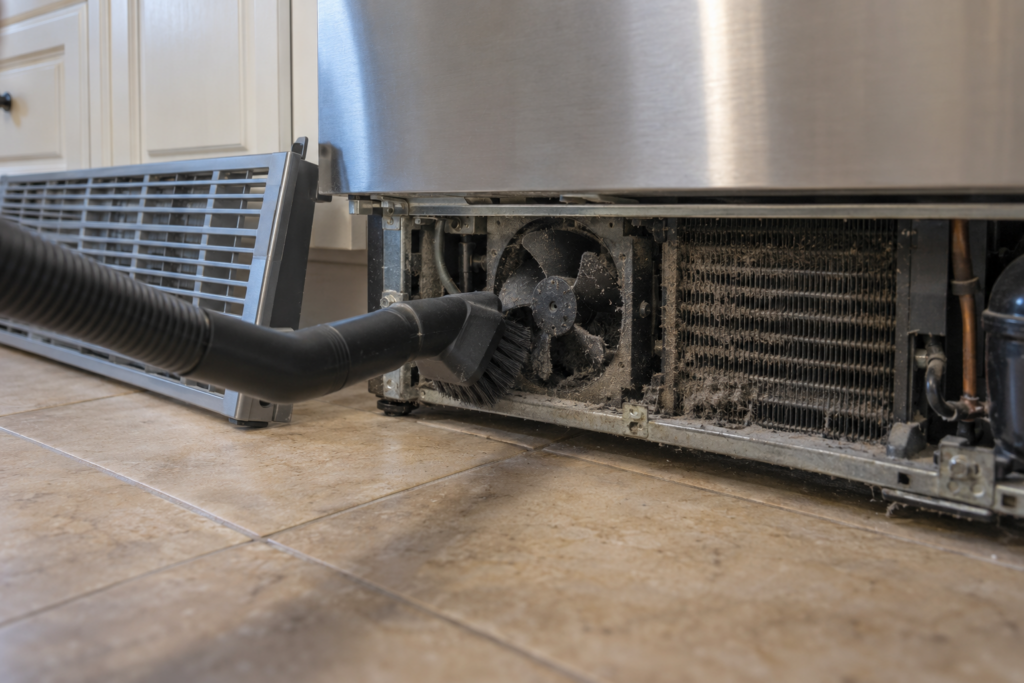
Four things, and they are all things an owner can influence. Dirty condenser coils come first: the maintenance guide calls them the number one cause of cooling failures, because dust forces the compressor to work longer and, over time, can lead to compressor failure, the most expensive repair.
- Dust on the coils. It insulates the condenser and makes the compressor run longer.
- A worn gasket. A poor seal lets warm air in, so the compressor runs more often.
- Temperatures colder than needed. Settings below 37 degrees for the fridge and 0 for the freezer raise energy use and can cause frost buildup.
- A clogged drain or filter. A blocked drain pools water in the cabinet, and an exhausted filter cuts flow to the ice maker.
Which Habits Matter Most?
The habits that matter are the ones on the table in our LG refrigerator maintenance guide, and they take about half an hour twice a year.
- Vacuum the condenser coils. Every six months, or every three with pets.
- Replace the water filter. Every six months, or when the indicator light turns on.
- Check the gaskets. Test the seal on a dollar bill; if it pulls out easily, the gasket needs attention.
- Verify the temperatures. 37 degrees for the fridge and 0 for the freezer, checked monthly.
- Clear the drain hole. At the back of the fresh food compartment, so water cannot pool.
Warning Signs of an Aging Refrigerator
Age shows up as change, and the earliest signs are small. A compressor that seems to run all the time, frost where there was none, a new noise from the back of the cabinet, a warmer shelf at the top or a rising electric bill are all worth writing down. They are the same signals the codes report, a little earlier.
Do not wait for a code, and do not assume that a refrigerator which still cools is healthy: a sensor that has drifted or a fan that has slowed can leave the cabinet within range while the compressor works harder to stay there. A fault that is repaired at the first sign is cheaper than one that has run for months, and the written record also helps if you later decide to replace. Our Er CF page and the Er dH page show what the common codes look like.
A Simple Log That Pays for Itself
The single most useful thing you can do for a refrigerator's later years costs nothing: keep a short log. Without one, the question of whether it is time to replace is answered from memory, and memory is poor at counting repairs.
- Dates of each clean. Coils, gaskets and the drain hole, so you can see what slipped.
- Every code and every repair. Date, code, part replaced and what it cost, kept in one place.
- The model and serial numbers. A photograph of the label saves a search whenever a part or a notice is in question.
A log also shows trends. A coil that was clean in spring and thick with dust by autumn tells you the kitchen is dusty or the pets are shedding, and the interval should shorten. Three codes in a year tell you the refrigerator is entering the stage where repairs cluster, and that is the time to start comparing a replacement.
When Does Age Tip Toward Replacing?
When a major repair arrives on a refrigerator past about 12 years, or when two arrive in two years. Below that, most repairs are worth doing, and our guide to whether an LG refrigerator is worth repairing gives the age table. The compressor is the usual decision point; see the LG linear compressor repair cost guide, and the LG refrigerator repair or replace guide for the full comparison.
The price of any repair is confirmed after on-site diagnosis, with a written estimate before work begins. LG refrigerator repair covers every fault named above, and our preventive maintenance visits cover the habits on the list. Schedule a visit or contact us with the age and the symptoms.