 Michael Thompson
Key Takeaways
- LG ice maker maintenance centers on the water filter, the supply line, and clearing fused ice clumps from the bin.
- FL means a water flow or fill fault, most often a clogged filter, a kinked line, or low household water pressure.
- IF, the ice bin full sensor fault, is very often a false alarm caused by ice sitting against the sensor rather than a real fault.
- Replacing the water filter every six months prevents a meaningful share of FL codes before they start.
- Diagnostic work starts from $89, though most FL and IF cases resolve with maintenance alone.
The Bottom Line
LG ice maker maintenance is mostly preventable: replace the filter regularly, check for fused ice clumps monthly, and confirm the water line is not kinked before assuming either code means a real fault.
An LG refrigerator ice maker that stops producing, or reports a full bin that clearly is not full, is usually showing one of two related codes. The LG ice maker FL and IF codes are both straightforward once you know what each one is actually checking, and a short maintenance routine prevents both from becoming repeat visitors.
| Code | What it means | Prevention |
|---|---|---|
| FL | Water flow or fill fault | Check water line and filter regularly |
| IF | Ice bin full sensor fault | Keep sensor area clear of ice clumps |
| FN | Ice maker fan motor error | Keep vents clear of frost buildup |
What Do the LG Ice Maker FL and IF Codes Mean?
FL means a water flow or fill fault — the ice maker is not receiving the water it needs to start a freeze cycle. IF means the ice bin full sensor has a fault, which can mean the bin is genuinely full, or that the sensor itself is misreading due to an ice clump sitting against it even when there is room in the bin. Both are common enough that a short, regular maintenance routine prevents most occurrences before they become a service call. A less common but related fault, FN, points at the ice maker's own fan motor rather than the water supply or the bin sensor.
Why the Water Flow Fault (FL) Happens
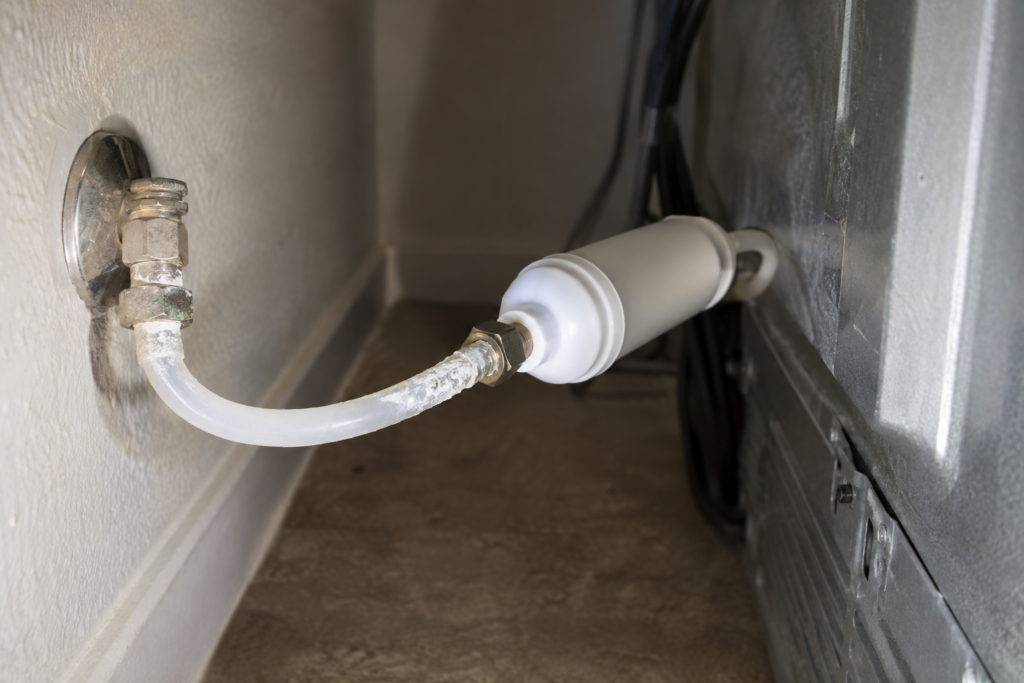
- A clogged inline water filter. Filters that are overdue for replacement restrict flow enough to trigger FL well before they stop working completely.
- A kinked water line. A refrigerator that has been pulled out and pushed back for cleaning can pinch the supply line without anyone noticing.
- Low household water pressure. A refrigerator on a long supply run from the main line is more susceptible to this than one close to the source.
- A frozen section of the water line, most common in a refrigerator installed against an exterior wall in a cold climate.
How Often Should You Do LG Ice Maker Maintenance?
- Replace the water filter every six months, or sooner if ice production has been slowing gradually rather than stopping suddenly.
- Check the bin for fused ice clumps monthly, especially after the refrigerator has sat unused for a stretch, since partially melted and refrozen ice is a common cause of a false IF reading.
- Inspect the water line for kinks any time the refrigerator has been moved for cleaning behind or underneath it.
- Confirm the freezer temperature is within the normal range — an ice maker in a freezer running too warm will produce ice more slowly and can appear to have a fault when the real cause is elsewhere.
Is IF Always a Real Fault, or Can It Be a False Alarm?
It is very often a false alarm caused by ice sitting against the sensor rather than the bin actually being full. Before assuming a sensor has failed, it is worth emptying the bin completely, breaking apart any fused clumps, and confirming the sensor arm — on models that use one — moves freely rather than being physically obstructed by ice. A sensor that clears after this simple check was never faulty in the first place; one that continues to report IF with an empty, clear bin is the case worth booking a technician for.
Households that use ice heavily during warmer months and lightly the rest of the year sometimes see IF appear specifically in the off-season, when ice sits in the bin long enough to partially settle and fuse together even without a fault anywhere in the system. Running the dispenser occasionally, even when not actively needed, keeps the bin from developing exactly this pattern. A quick scoop and discard of the top layer of ice every couple of weeks during low-use periods is a small habit that keeps the bin cycling fresh ice rather than letting the same batch sit and fuse over time.
- Empty the bin completely and check for large fused clumps stuck against the sensor location.
- Break apart any clumps by hand rather than forcing the auger or dispenser mechanism to do it.
- Run one full ice cycle after clearing the bin to confirm IF does not return immediately.
- Book a diagnostic only if IF persists with a genuinely empty, clear bin — at that point the sensor itself is the likely cause.
Whether an Ice Maker Fault Affects the Rest of the Refrigerator
Not directly in most cases, since the ice maker draws from the same freezer compartment but runs its own separate water and sensor system. That said, a freezer that is running warm for unrelated reasons will produce these symptoms alongside a genuinely slow ice maker, which is why it is worth ruling out a broader cooling issue — covered in our LG refrigerator maintenance guide — before assuming the ice maker itself needs a repair.
A refrigerator that has recently had its water filter changed, or that was recently moved for cleaning, is worth double-checking specifically for these two causes before assuming a coincidence — both are common triggers for FL that owners often do not connect to the maintenance task that caused them. A filter installed slightly crooked, or a water line kinked while pushing the refrigerator back into place, produces the identical symptom to a filter or line that failed on its own.
Ice production also naturally slows in the days right after a filter change, since the system needs to flush air out of the line and re-establish steady flow — do not assume a fault just because output is not instantly back to full speed. Give it a day or two of normal use before deciding whether FL is a genuine ongoing issue or simply the system settling back in after routine maintenance.
A third code worth knowing about, since it is easy to lump in with FL and IF, is HS — a harvest sensor fault, which affects the step where formed ice is released from the tray rather than the water supply or the bin level. If ice is forming but never actually drops into the bin, HS rather than FL or IF is the more likely explanation, and it points a technician at a different part of the mechanism entirely.
What Does an Ice Maker Repair Cost If Maintenance Does Not Resolve It?
Diagnostic work on an LG ice maker fault starts from $89, which confirms whether the cause is the water inlet valve, the fill tube, the sensor itself, or something upstream in the freezer's cooling system. Most FL and IF cases resolve with the maintenance steps above and never need a service visit at all. Our LG ice maker repair service and our broader preventive maintenance plan both cover this system. Schedule a visit if FL or IF keeps returning after the checks above, and let us know whether the filter has been changed recently — that single detail often shortens the visit considerably.