 Michael Thompson
Key Takeaways
- LG dishwasher code OE means the drain cycle did not complete in time — the pump, a clog, or the control board can all cause it.
- LG dishwasher drain pump replacement cost sits in the middle of the range: more than a filter fix, less than a control board repair.
- Clearing the bottom filter and checking the drain hose for kinks resolves a meaningful share of OE cases for free.
- Diagnostic work starts from $89 and confirms the exact cause before any part is ordered.
- bE (excessive suds) alongside OE usually points at detergent, not the pump.
The Bottom Line
LG dishwasher drain pump replacement cost is a moderate, predictable repair once confirmed — check the filter and hose yourself first, since a clog causes the identical OE code for free to fix.
An LG dishwasher that stops with standing water in the tub and posts OE is reporting a drain error, and the LG dishwasher drain pump replacement cost is one of the more predictable repairs on this appliance once a technician has confirmed the pump rather than a simpler blockage is the cause.
| Cause behind OE | Typical fix | Relative cost |
|---|---|---|
| Clogged filter or drain hose | Clean or clear the blockage | Inexpensive, sometimes free |
| Kinked or improperly installed hose | Reroute or replace the hose | Inexpensive |
| Failed drain pump | Pump replacement | Moderate |
| Control board fault | Board diagnosis and repair | Higher |
What Does the LG Dishwasher OE Code Mean?
OE means the dishwasher cannot complete its drain cycle in the time the control allows. This is a broader category code than it might seem — it describes the outcome, water not leaving the tub fast enough, rather than pointing at one specific part. That is exactly why a diagnostic visit matters before assuming a pump replacement is needed: a clogged filter produces the identical code as a genuinely failed pump.
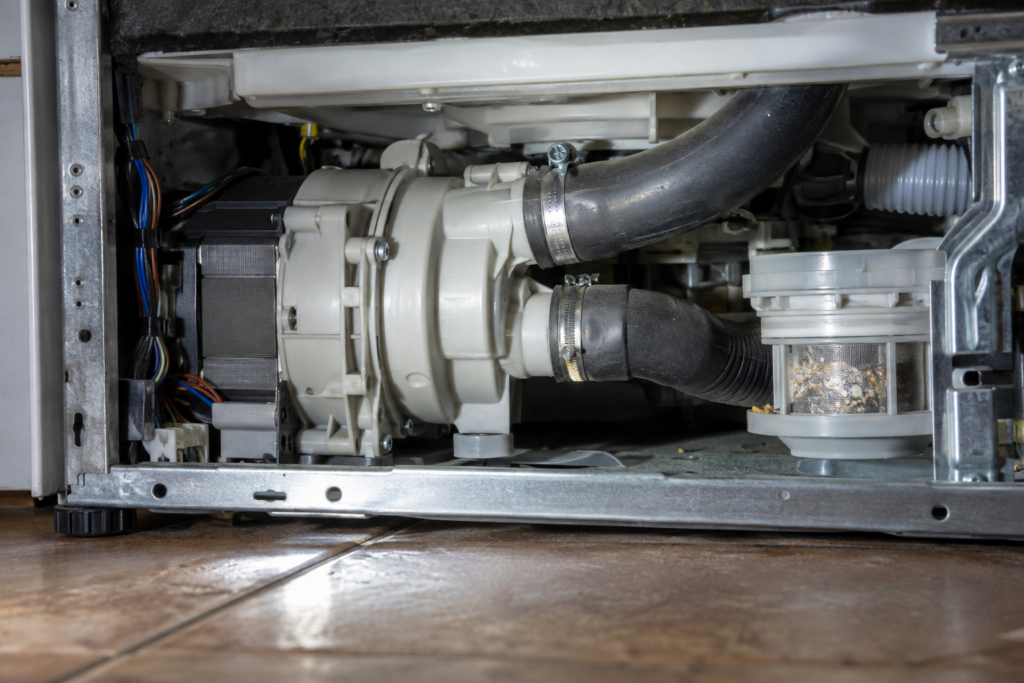
LG Dishwasher OE Repair Cost Breakdown
Diagnostic work on an LG dishwasher drain fault starts from $89, and that visit is what separates an inexpensive filter cleaning from a genuine drain pump replacement. The pump itself sits in the middle of the cost range for dishwasher repairs — more than a filter or hose fix, less than a control board replacement — and the exact total is confirmed in writing once the cause is isolated, never quoted before the unit has been opened up.
- Filter or hose blockage: the least expensive outcome, and one you can often check yourself first.
- Drain pump replacement: a moderate, well-defined repair once confirmed as the cause.
- Control board fault: less common, and the most expensive of the group.
Can You Check for a Blockage Yourself First?
Yes, and it is worth doing before assuming the pump has failed, since a clogged filter is a common and free-to-fix cause of the same code:
- Remove and rinse the bottom filter — food debris packed against the mesh is the single most common cause of a slow drain.
- Check the drain hose for kinks behind the unit, especially if the dishwasher was recently moved or reinstalled.
- Confirm the air gap or high loop under the sink is not blocked, since both are required for the dishwasher to drain properly.
- Run a short cycle after clearing the filter to see whether OE returns before booking a technician.
If OE persists after all of that, the pump itself is the more likely cause, and that is where a diagnostic visit earns its cost rather than guessing at a part to order. Related fill and drain issues are also covered in our LG dishwasher not draining guide, and a machine that shows bE, excessive suds, alongside OE is usually a detergent issue rather than the pump.
Telling the Pump Apart From a Simple Clog
A few signs point more strongly toward the pump than a simple blockage, and knowing them before a technician arrives helps set realistic expectations for cost:
- An unusual grinding or humming noise during the drain phase, rather than silence, often means the pump motor is straining against something or wearing out internally.
- The drain phase starts but never finishes, as opposed to never starting at all — a clog tends to stop things completely, while a weakening pump often manages a partial drain.
- OE appears even right after a filter cleaning and a hose check, with no improvement at all.
- The dishwasher has run for many years without the pump ever being serviced — pumps do have a service life, even a long one.
- You have already cleared the filter and hose and OE returned on the very next cycle, leaving little room for a lingering clog to be the explanation.
None of these on their own confirm a pump failure with certainty, which is exactly why the diagnostic step exists — a technician can test the pump directly rather than relying on symptoms alone. A pump that is drawing power but not moving water efficiently sounds different from one that has seized completely, and a trained ear combined with a direct current draw test settles the question far faster than continued guessing at home.
It is also worth ruling out the simplest possibility first: a cycle that was interrupted by opening the door partway through, or a power blip during the drain phase, can leave water sitting in the tub without any part having failed at all. Restarting a rinse cycle after confirming there was no interruption is a reasonable first step before assuming either a clog or a pump fault.
Is It Worth Replacing the Drain Pump on an Older Dishwasher?
Usually yes. A drain pump is a self-contained, well-understood repair on a dishwasher that is otherwise functioning normally, and it is rarely the kind of fault that signals the whole appliance is failing. A broader breakdown of what LG dishwasher repairs run across the board, for when the pump is one of several aging systems, is in our LG dishwasher repair costs guide. Replacing a drain pump also does not require replacing anything else in the machine — the wash pump, the heating element, and the control board are all separate components, so a drain fault does not put the rest of the dishwasher's systems in question the way a control board failure sometimes does. That containment is good news for the overall repair-versus-replace picture on an aging dishwasher — a machine that is otherwise cleaning normally and only struggling to drain is a far easier case for repair than one showing multiple unrelated faults at once.
What a Drain Pump Repair Visit Includes
A technician tests the pump directly, checks the filter and hose path, and inspects the control board's drain cycle signal before replacing anything — the same OE code can point at any of these, and confirming which one is the point of the visit. Our LG dishwasher repair service covers the pump, hose, and filter path in one visit. Schedule a visit if clearing the filter and hose does not resolve a repeat OE code, or send us the code and how long the machine has been in service for a rough sense of what to expect before booking.
Owners deciding whether to book a technician right away can use one quick distinction: OE that clears completely after a filter clean and a short test cycle was a clog, not a pump, and needs nothing further. OE that returns on the very next full cycle, especially with a grinding or humming sound during the drain phase, is the pattern worth booking a diagnostic for rather than trying a second or third cleaning pass — repeating a fix that already did not work rarely produces a different result the second time.